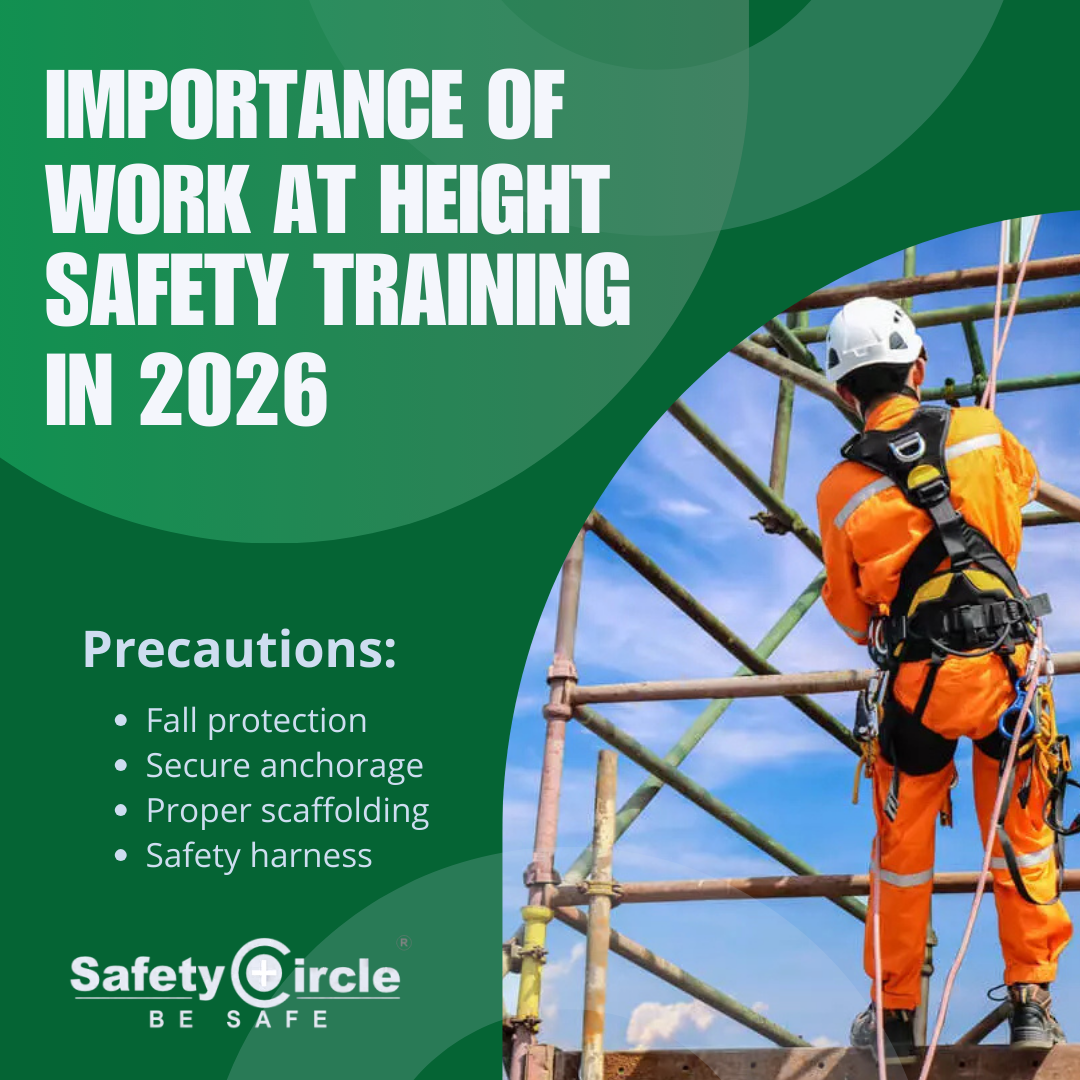
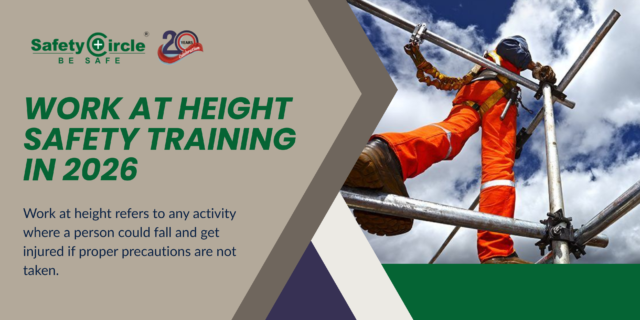
If any of your employees are working at height, even just a tiny percentage of their job, they are subjected to one of modern work Life’s most severe occupational risks. In 2026, the industry will be more complex, and compliance standards will be higher; therefore, work at height safety will be a business need rather than just a best practice.
Now, let us have a closer look at what makes Height Safety Training significant to you and your organisation, helping ensure a safe, more productive workforce.
Why Working at Height Is Still a Leading Risk
Even though safety technologies have improved, working at height safety incidents are still causing some of the top workplace fatalities globally. Whether it’s construction and maintenance projects, warehouses, or even telecom towers, falls from height account for around a third of serious work injuries.
The problem is not always with the equipment, but usually with a lack of awareness. Workers could skip inspections, take shortcuts, and forget how to secure themselves to the harnesses and how to use a ladder. This is where work-at-height safety training comes in.
What Height Safety Training Covers
A full-fledged Height Safety Training program extends beyond a compliance box-ticking exercise. It is about preparing and upskilling your people to be highly capable of knowing exactly what actions to take in real-world high-risk environments.
Most modern training programs do have the following criteria:
- Risk Assessment: Knowing how to recognise height-related health risks before working.
- Familiarisation with Equipment: Proper use, maintenance and inspection of ladders, scaffolds, harnesses and anchors.
- Emergency Procedures: A well-known act in case of any incident, including how to rescue.
- Safe Work Practices: The hierarchy of controls — eliminate height wherever possible — fall prevention system — fall arrest system
- Political Compliance: Keeping up with changing 2026 legislation and workplace guidelines.
Working-at-heights safety training doesn’t simply instruct workers on what to do — it explains why those decisions are essential!
The 2026 Landscape: Stronger Standards, Higher Expectations
With 2026 around the corner, health and safety at work at height is becoming a global focal point. Regulatory authorities are conducting more in-depth compliance checks, and many insurance companies are requiring certified safety training before they issue liability coverage.
Having said that, here are a couple of industry trends this year.
- Blending digital learning: Classrooms are being combined with immersive virtual reality simulations, enabling employees to practice in real-world scenarios.
- Combat safety with data: IoT-based height-monitoring devices and Smart PPE (Personal Protective Equipment) send real-time alerts about unsafe conditions.
- Accountability of employers: There is an increasing trend in regulatory frameworks that require employers to account for incidents, not just for insufficient training.
Putting an inch in working-at-heights safety training in this environment could be pretty expensive and life-threatening, hampering compliance scores, insurance premiums, and brand reputation.
How Height Safety Training Enhances Team Performance
Although the primary objective of work-at-height safety training is protection, the good news is that it offers far more benefits than just accident prevention.
- Boosted confidence and morale
Security is a motivator, and motivated workers do better. And training lets your team know that they are prepared, so they have a level of focus and ease when they get to work.
- Reduced downtime
A decrease in accidents means fewer interruptions, fewer investigations, and fewer medical leaves — and that obviously leads to increased productivity.
- Improved compliance and audits
This practical safety training makes inspections and documentation for occupational safety authorities easier.
- Stronger safety culture
Even workers not operating at height become more aware of risk identification and mitigation — reinforcing overall workplace safety training initiatives.
The Connection Between Work at Height and Broader Safety Training
A common misconception in organisations is that they can treat Height Safety Training in isolation rather than as part of broader health and safety training efforts.
Similarly, the rationales that apply to height safety (risk identification, proactive planning, and procedure adherence) underpin all methods of performing safe work. This is particularly effective alongside generic workplace safety training to create an overall safety ecosystem in which every worker plays their part in maintaining a safe workplace.
For instance, a multidimensional view of possible risks supports better on-site decision-making by an electrician who has received safety instruction in both electrical hazard awareness and working-at-heights safety training.
Common Myths About Work at Height Safety
Myth 1: Short tasks require no protection
A task lasting only five minutes at only a couple of meters high can still lead to serious injury. Height is not a function of danger; duration of danger is.
Myth 2: ”Veteran talent doesn’t require training.”
Experience doesn’t replace safety certification. As professionals work in this sort of environment for long enough, they develop dangerous shortcuts. Professional training fills that gap.
Myth 3: “Harnesses are enough.”
That being said, while life-saving, harnesses are just a single element of a fall protection system. Equally crucial to anchors and to proper supervision is proper risk assessment.
We need to address these misconceptions before we can take a proactive approach to a health and safety culture for working-at-height safety training.
FAQs on Work at Height Safety Training
- Who needs Height Safety Training?
All personnel who work above ground level, whether on ladders, roofs, scaffolds, or platforms, should receive certified training.
- How often should retraining happen?
It is suggested that refresher courses be held at a minimum of once every year or every other year, particularly when regulations or equipment standards change.
- Is online training enough?
They are fine for theory, but need to be combined with practical classes to get your hands dirty.
- What are the legal requirements in 2026?
You need to submit proof of working-at-heights training before your employees can do any work above ground. The laws surrounding compliance have become stricter, with audits looking for proof of training and evidence that it is being put into practice.
- What benefits does good training help you achieve?
Fewer incidents, better compliance ratings, improved workforce confidence, and a safety program that earns your business a good reputation.
How to Get Started
Not only is it not an option to work at height without proper safety measures in 2026, but it is also a wise investment. Brands that appeal to safety will not only protect their employees but also achieve high or measurable productivity, brand trust, and resilience.
Putting strong emphasis on making health and safety working at height practical helps in ensuring that every person in the team returns home every day. Creates an environment where safety is not just an afterthought.
And when it comes to building that culture, trusted partners like Safety Circle continue to raise the bar for valuable training, efficient compliance, and tangible results.
Conclusion: Building a Safer Future with Safety Circle
In 2026, investing in working at height safety isn’t optional; it’s strategic. Companies that value safety not only protect their employees but also gain measurable advantages in productivity, brand trust, and long-term resilience.
Prioritising effective health and safety working at height ensures that every team member goes home safely every day. It builds a culture where safety isn’t an afterthought, but a constant.
And when it comes to building that culture, trusted partners like Safety Circle continue to set the benchmark for quality training, compliance excellence, and real-world impact.