Objective
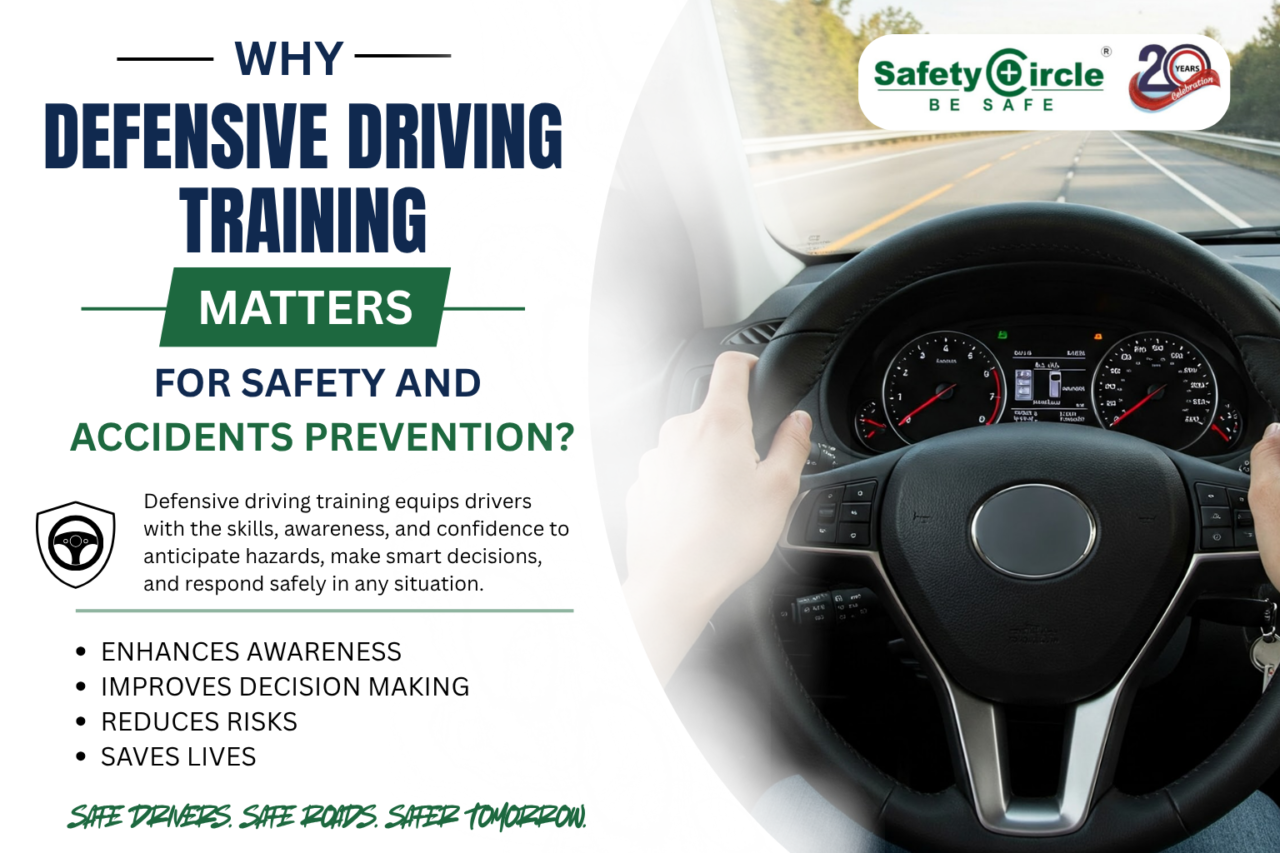
This guide analyzes how defensive driving training serves as a critical intervention for accident prevention. We examine the transition from reactive to proactive hazard recognition within the high-stakes environment of Indian highway logistics.
Key Takeaways
- Reactive driving is the primary cause of industrial fleet losses on major expressways.
- Training builds muscle memory for anticipatory maneuvers rather than basic vehicle handling.
- Traditional licensing often fails to prepare operators for the unpredictability of “middle-mile” transit.
- Consistent skill assessment reduces both catastrophic collisions and vehicle wear-and-tear.
- Proactive hazard detection is a quantifiable business asset for modern logistics firms.
Table of Contents
- The Human Element in Highway Survival
- Defining Professional Operator Skill
- Institutional Fleet Risk Management
- Corporate Liability and Road Culture
- Frequently Asked Questions
- Managing Safety with All Zones
How does the human element dictate highway survival?
Road safety is rarely about the road itself. It is about the person behind the wheel. We are seeing a significant shift in how safety is quantified. Recent data tabled by the Ministry of Road Transport and Highways in Lok Sabha shows that accidents on National Highways fell 11% in 2025 compared to 2024, with fatalities dropping by over 7,000. This improvement suggests that targeted interventions and better awareness are working. However, infrastructure growth still outpaces operator discipline. A world-class expressway is only as safe as the least-trained driver on it.
Relying on luck isn’t a strategy. Most drivers learn by trial and error in high-traffic city zones, but highway speeds demand a different neurological response. If you wait for a hazard to occur before reacting, you have already lost. The goal is to see the disaster before it manifests.
Why is defensive driving training a non-negotiable for 2026?
Operating a commercial vehicle is a high-stakes professional task that requires more than just mechanical knowledge. Today, defensive driving training is being integrated into corporate recruitment because it addresses the behavioral gaps that lead to fatal errors. You aren’t just training a driver; you are protecting a multimillion-rupee asset and the lives surrounding it. In a market where replenishment speed is everything, a single “total loss” accident can bankrupt a small fleet.
What distinguishes a professional defensive driving course?
A standard lesson teaches you how to move a truck from point A to point B. A professional defensive driving course teaches you how to survive the mistakes of everyone else on the path. It focuses on the “Space Cushion” and “Following Distance” concepts that are often ignored in the aggressive lane-weaving common in Mumbai or Delhi traffic. This isn’t just theory; it is about conditioned reflexes. If an operator hasn’t practiced a high-speed swerve in a controlled simulation, they will freeze when it happens on the NH-44.
How safety defensive driving training protects corporate liability
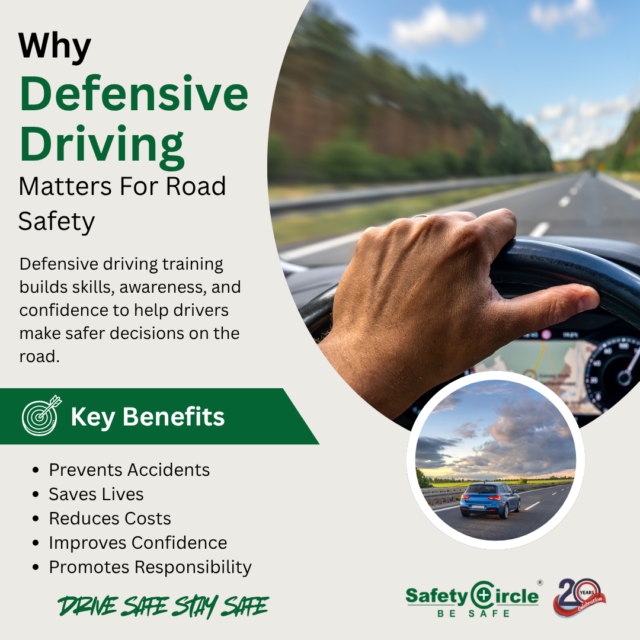
When a collision occurs, the fallout goes beyond the immediate damage. There is a legal and administrative nightmare that follows. Implementing safety defensive driving training provides an additional layer of institutional protection. It proves that the company took every possible step to ensure operator competence. For a safety training company, the focus is often on this intersection of legal compliance and human life. You cannot manage what you do not measure, and you cannot measure safety without a structured curriculum.
What defines the effectiveness of a defensive Driving course in India?
The Indian landscape presents unique challenges: unpredictable livestock, sudden pedestrian crossings, and non-functional taillights on heavy trailers. A defensive driving course in India must be tailored to these specific localized risks. A generic European training module won’t work in the Western Ghats. You need a curriculum that understands the “unspoken rules” of the road.
Why is the safety circle essential for institutional growth?
Building a culture of safety requires a centralized point of reference. At the safety circle, we observe that the most successful firms are those that treat road safety courses as a recurring professional development requirement, not a one-time induction checkbox. If your drivers aren’t being re-evaluated every six months, their habits will inevitably degrade. Professional road safety is a perishable skill. It requires constant reinforcement and updated modules that reflect the latest technological changes in vehicle braking systems and telematics.
Why road safety education is the spine of fleet logistics
Instruction is the most cost-effective insurance policy you can buy. Through structured road safety education, drivers learn to manage the physics of their load and the psychology of fatigue. It is about the “long game.” A driver who understands how to modulate speed to avoid brake fade is a driver who brings the cargo home every time. It is a transition from being a vehicle operator to being a professional safety practitioner on the road.
FAQs
What does defensive driving training actually change?
It shifts the mindset from vehicle operation to hazard management. Most drivers watch the bumper in front. We train them to watch the road three cars ahead. This provides the three seconds needed to recognize the “tell” of a tired driver and avoid a catastrophe.
Why is a professional course better than years of experience?
Experience usually means you’ve survived your mistakes by luck. A structured course replaces luck with conditioned reflexes. It is the difference between guessing and knowing how a vehicle behaves when the tires lose grip at high speed.
Does specialized safety training actually lower insurance costs?
Insurers look at your claims history. Better drivers mean fewer claims. It’s a direct financial correlation. Beyond premiums, you avoid the administrative nightmare of dealing with the police and surveyors after a “total loss” event that ruins your brand.
Can this type of education fix the “speeding” culture?
Speeding is often a lack of understanding of physics. Once a driver understands that doubling their speed quadruples their braking distance, their behavior changes. It becomes about respect for the machine and the payload, not just fear of a fine.
Secure Your Operations with Defensive Driving Training and All Zones
Managing the logistics of a safe fleet is an administrative burden that can distract from your core business. While you focus on the product, the reality of the road usually wins if left unmanaged. All Zones acts as the essential bridge to ensure that quality remains accessible and streamlined. We simplify the complexity of procurement and safety standards so you can focus on the experience rather than the logistics of the middle-mile. If you are ready to elevate your standards and secure your spot on the safe side of the statistics, the solution is right here. Book A Call Now.