Blog Objective
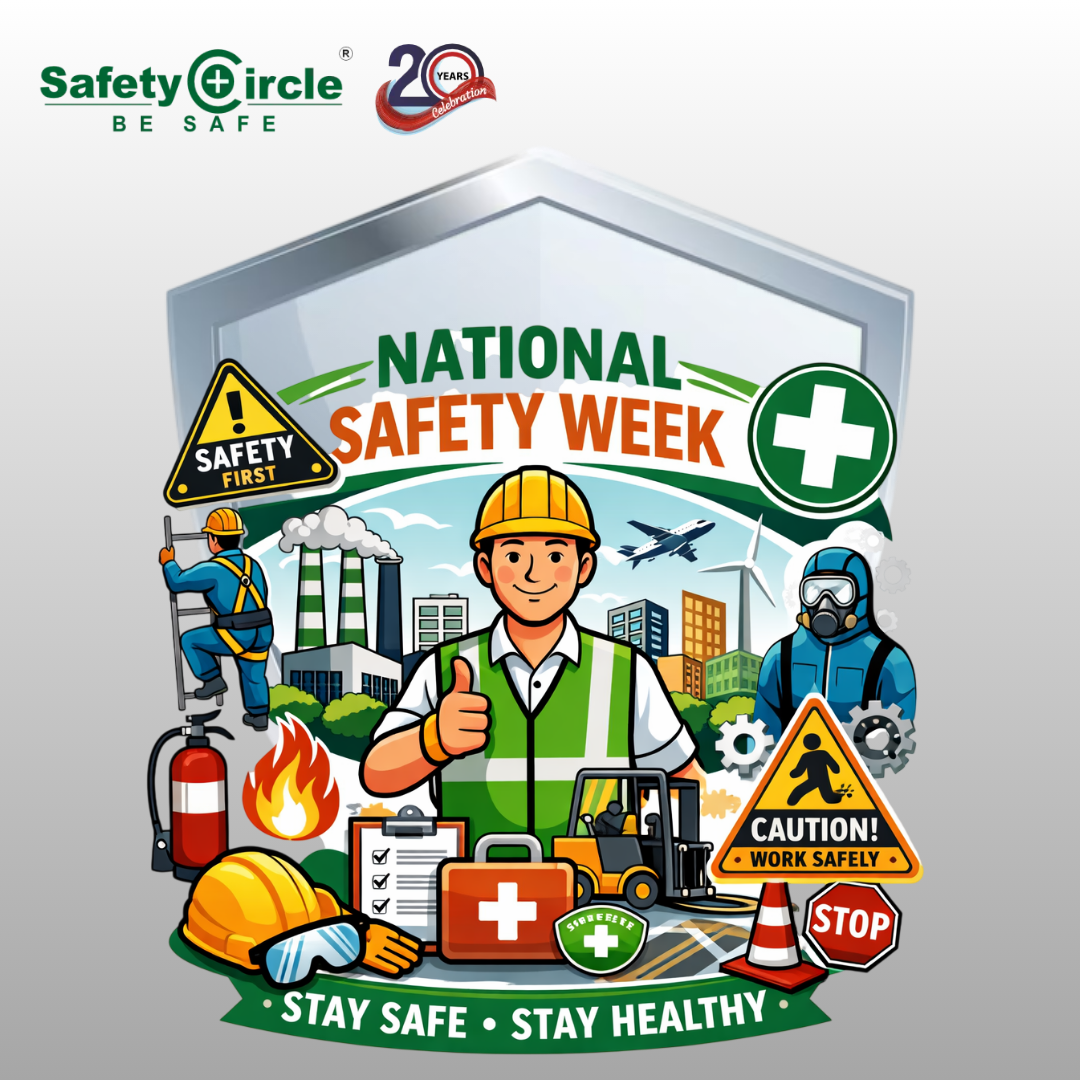
This blog helps you understand what National Safety Week 2026 all it is about and why it matters for your workplace or community. We’ll show you simple ways to participate and make a real difference in creating safer spaces across India.
Did You Know?
The data collated from different documents of the Ministry of Labour & Employment and the Directorate General Factory Advice Service & Labour Institutes (DGFASLI) reveals that on average, 3 workers are killed every day because of accidents in registered factories across India. Therefore, it translates to over 1,000 fatal workplace accidents on an annual basis, with this number only representing registered factories, implying that the number of injuries in all workplaces can be even higher.
Key Takeaways
- National Safety Week usually runs from March 4 to 10 with the theme “Safety & Well-being Crucial for Viksit Bharat.”
- Whether you run a business, manage a team, or want to make your home safer, this week gives you the perfect opportunity to build a culture where safety comes first
- You don’t need a big budget or fancy programs, just genuine commitment to protecting the people around you
Have you ever stopped to think just how safe your workplace or community is? Take positive steps toward making these spaces safer for everyone. National Safety Week in 2026 is just around the corner, from March 4th to 10th.
Table of Contents
- What the 2026 Theme Means for Indian Workplaces
- Important Dates You Need to Know
- Understanding This Year’s Theme
- The Four Key Safety Areas
- How You Can Participate
- Making Safety a Year-Round Priority
- Frequently Asked Questions
- Taking Your First Step
What the 2026 Theme Means for Indian Workplaces
The theme for 2026, “Safety & Well-being Crucial for Viksit Bharat,” clearly indicates that safety is no longer an option for Indian organizations; rather, security is the foundation for the development of India. As India prepares for its development goal of 2047, organizations must understand that development and employee safety are synonymous.
On the part of workplaces, this theme encourages moving beyond basic compliance. This involves ensuring active risk assessment, safety training, initiatives for mental health, and enhanced emergency readiness programs. Reducing accidents, avoiding Work-related diseases and ensuring road safety for those who commute to work are part of creating a responsible organization.
What does this imply in actual terms? It implies an advance review of safety policies introduced prior to March 4, conducting safety drills during National Safety Week, and ensuring employees are trained to respond to situations in real life confidently. When business organizations focus on safety, they don’t just save lives; they also save time and contribute to a stronger and more powerful India.
Important Dates You Need to Know
- March 4, 2026, is National Safety Day, when most organizations kick things off with a safety pledge.
- March 4-10, 2026, is the full annual safety week, when real action happens across the country.
- During these days, you’ll see safety campaigns everywhere. Manufacturing plants run emergency drills. Schools hold poster competitions. Offices conduct fire safety training. Even residential societies check their firefighting equipment.
- Start preparing by mid-February. Good safety programs need proper planning.
Understanding This Year’s Theme
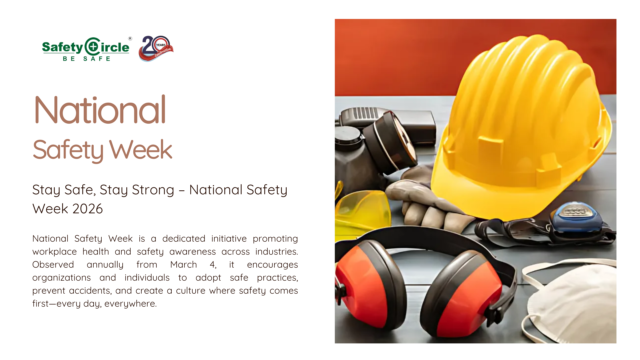
This year’s theme is “Safety & Well-being Crucial for Viksit Bharat.”
- Viksit Bharat means developed India, our country’s vision for 2047. This theme connects safety directly to that vision.
- Here’s the thing. You can’t build a strong nation if workers keep getting injured in factories. You can’t grow economically if talented professionals are burning out from workplace stress.
- The theme says safety isn’t separate from development. It’s the foundation. When you create a safe workplace, you’re building employee confidence, reducing medical costs, improving productivity, and contributing to national growth.
The Four Key Safety Areas
Workplace Safety
Most accidents happen from everyday hazards we ignore. The oil spill nobody cleaned up. The frayed wire has been on the repair list for weeks. The safety guard was removed from a machine and never put back.
Workplace safety is about creating systems where safe behavior becomes automatic. Working with an experienced safety training company helps establish proper protocols that get followed.
Road Safety
Your employees’ commute is part of their work life. If an employee has an accident driving to work, that affects your organization through absence and lost productivity.
Defensive driving training programs teach drivers how to handle challenging situations and reduce accident risks. India has the highest number of road accident fatalities globally. Teaching proper defensive driving training saves lives.
Health and Environmental Safety
This area often gets overlooked because the dangers aren’t always visible. Air quality matters. If people breathe in dust or fumes every day, it affects their health over time.
Chemical safety needs attention. Are hazardous materials properly labelled? And yes, mental health belongs here too. Work stress and long hours affect well-being just as much as physical hazards.
Fire Safety and Emergency Preparedness
If a fire broke out in your building right now, would everyone get out safely? If you hesitated, that’s a problem.
Fire safety isn’t just about having the extinguishers present on the wall but is also concerned with regular drills, clear exits, and working alarms. Fire does not give you time to figure out the proceedings. You are either prepared or not.
How You Can Participate
For Larger Organizations
Form a safety week committee with people from different departments. When leadership participates, everyone else takes it seriously.
Start with a safety pledge ceremony on March 4. Each day, focus on different themes like hazard identification, fire drills, road safety, and defensive driving training. End with recognition and awards for safety champions.
Include hands-on activities, not just presentations. People remember experiences, not PowerPoint slides.
For Small Businesses
Safety doesn’t have to be expensive. Start with a simple walkthrough of your premises. Note hazards. Fix obvious issues like blocked exits and loose wires.
Hold a 30-minute safety meeting daily during the week. Bring in a safety training company expert for one session. Many offer affordable rates. Partner with other small businesses nearby to share costs.
For Schools and Educational Institutions
This can be made interesting for the students. Safety poster competitions can be conducted in elementary schools, while safety quiz competitions and street plays on safety can be conducted in middle and high schools.
Colleges can plan technical workshops, as well as guest lectures from safety experts. Students must be involved in the planning process. By making them a part of the planning, they will learn the topics more thoroughly.
For Residential Communities
Organize home safety workshops for residents. Check fire safety equipment. Run elderly safety programs since falls are a leading cause of injury. Teach child safety education. Train security guards and residents in first aid.
Making Safety a Year-Round Priority
- One week isn’t enough. The real goal of annual safety week is to kickstart changes that continue throughout the year.
- Create monthly safety themes. Make reporting easy so people can report hazards without fear of blame. When people see that reporting leads to improvements, they keep doing it.
- Regular training helps because people forget. Schedule refresher sessions. Keep them short and focused. Track and share metrics like incident rates and training completion. When people see improvements, it motivates continued effort.
Frequently Asked Questions
1. When exactly is National Safety Week 2026 celebrated?
Conventionally, National Safety is celebrated every year from 4th to 10th March, starting with National Safety Day on 4th March. Although the dates for 2026 have not yet been officially published, the trend should occur that the week-long campaign covers approximately a week. During this week, most organizations take up safety pledges, workshops, and awareness activities to ensure safety in workplaces and the community.
2. What’s the theme for this year, and what does it mean?
Prioritizing safety and well-being is essential for achieving the vision of Viksit Bharat, a developed India by 2047. The theme relates safety & well-being practices with the growth of India. It states that we cannot build a developed India without safe work environments and workers.
3. Can small businesses with limited budgets participate effectively?
Absolutely, safety does not need a big budget. Some of the simple steps to start with include rectification of obvious hazards, conduct of 15-minute safety talks every day, and introduction of a ‘hazard reporting system.’ One can share the cost of training with other industries in the neighborhood. What matters most here is commitment and not the complexity of the programs.
4. How do we keep the momentum going after the weekends?
Create monthly safety themes so something is always in focus. Make hazard reporting simple and act on reports quickly. Schedule quarterly refresher training. Track safety metrics and share them regularly. The key is making safety part of your routine, not a special event.
Taking Your First Step
You don’t have to implement everything right away. You simply have to begin. This could mean walking around your workplace identifying hazards, fixing some obvious problems, or conducting a safety training. You could just strike up a conversation about safety.
Make early March 2026 a time to focus on safety. You don’t need special knowledge or expertise, just the willingness to take action and care about protecting yourself and others.
Every step toward safety is a step toward preventing injuries and saving lives. Plan ahead and mark your calendar today.
Safety is not just about compliance; it is all about people going home safely every day.
Let’s work towards a safer India, one workplace, one school, and one neighborhood at a time.