Road accidents remain one of the leading causes of injuries and fatalities in India. Understanding the road safety week history helps us realise why this national observance is so important today. Road Safety Week 2026 in India is not just a campaign; it is a collective reminder to adopt safer behaviour on roads, protect lives, and build long-term awareness among citizens. Organisations such as Safety Circle India actively support these initiatives by promoting structured safety awareness and training across workplaces and communities.
Key Takeaways
- Road Safety Week 2026 is another step in India’s continuous effort for safer roads
- Knowing about the history of road safety puts more emphasis on the continuous awareness
- Knowing about it helps citizens take responsibility for safer behaviour
- Structured activities for road safety drive real engagement and learning
- Organisations such as Safety Circle India play a key role in supporting effective road safety initiatives
What Is Road Safety Week and Why Does It Matter?
It is a nationwide awareness campaign that aims to reduce road accidents by educating road users about traffic rules, safe driving habits, and pedestrian safety. The focus is on creating responsible behaviour among drivers, riders, and even children.
When talking about it, it is important to note that it targets all age groups. From school programs to corporate road safety sessions, the goal is to reduce negligence, overspeeding, drunk driving, and non-use of helmets or seatbelts. With growing traffic and urbanisation, such initiatives have become even more essential than earlier.
Road Safety Week History in India
To stem the alarming rise in road accidents across the country, the initiative was started, the Ministry of Road Transport and Highways (MoRTH). This has been going on for years and slowly transforming from mere awareness programmes into a strong and large-scale movement including all the players of the government, NGOs, schools, and private organisations.
If you ask when it was started in India, it was already late 1980s when the country took the initiative to make a plan and carry out the national observance in a structured way in the 1990s. The scope has further widened to include not only online campaigns, social media marketing, but also people’s gathering at the grass-root level.
The history of road safety is a mirror of India’s transformation from a reactive system of accident management to one that is proactive in prevention through education and enforcement.
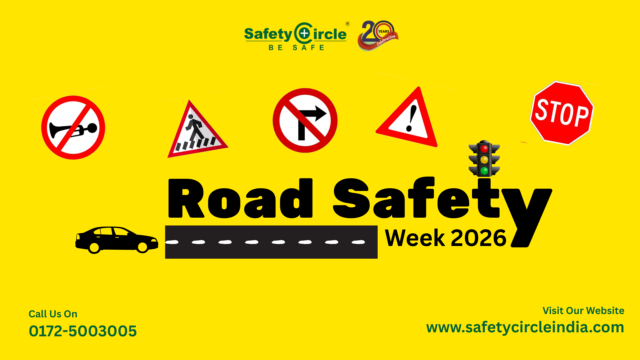
Objectives of Road Safety Week 2026
When discussing about the road safety, the objectives are clear and practical:
- Reduce road accidents and fatalities
- Promote adherence to traffic rules
- Encourage use of helmets and seatbelts
- Spread awareness on pedestrian and cyclist safety
- Educate young drivers on responsible behaviour
Organisations such as Safety Circle India support these objectives by delivering professional safety training, workshops, and compliance programs that align with national road safety goals.
Key Themes and Focus Areas for Road Safety Week 2026
Each year, road safety highlights specific themes. In 2026, it is set to concentrate on the following areas:
- Speed management and lane discipline
- Drunk and distracted driving prevention
- Child and school zone safety
- Commercial vehicle and workplace road safety
- Emergency response and first aid awareness
These focus areas help translate awareness into real-world behavioural change.
Activities for Road Safety Week Across India
This can really be beneficial through well-thought-out activities that ensure the public’s attention. Some of the activities that are organized regularly are:
- VR-based training
- Safety games
- Simulator-based learning
- Kahoot interactive quizzes
- Workstation activity
- Drunk buster
- Canopy activity
- Backdrop carnival
- Stage carnival
- Sear belt convincer
- Shop floor activity
- Participation in plant mela
Many corporates and institutions collaborate with safety experts to design impactful awareness activities. Safety Circle India often contributes by supporting organisations with structured safety programs, toolkits, and expert-led sessions.
When practical activities are embedded into safety programmes, awareness shifts from theory to daily habits.
Role of Schools, Corporates, and Communities
It would be imperfect to discuss road safety without referring to the community involvement. Schools are essential since they educate children at an early age and the corporates are concerned with the safety of commuting employees and fleet management.
At the community level, involvement is guaranteed to target the pedestrians, cyclists, and senior citizens with the messages. According to the history of road safety, successful campaigns have always included the cooperation of the government, the work of the private organisations, and non-governmental organisations.
As a company with high focus on safety culture, Safety Circle India helps organisations adopt road safety practices in their daily operations instead of concentrating on a weekly campaign.
Government Initiatives Supporting Road Safety Week
The Indian government strengthens road safety initiatives through stricter legislation, improved infrastructure, and digital enforcement systems. Understanding when this national awareness week started in India highlights how policy support has evolved over time.
The programs like the amendment of the Motor Vehicles Acts, increased fines, and social media campaigns are some of the methods used to promote the messages spread during the week. These actions reflect insights gained from years of nationwide road safety initiatives.
Why Road Safety Awareness Is Still Critical in 2026
Even with the efforts being made, India has remained the country that records the highest number of road accidents every year. That is the reason why there is a need for strong road safety awareness programs. Changing mindsets takes time, consistency, and reinforcement.
When people get to learn about safe road practices, they are more aware of their duty on road. Campaigns supported by experts such as Safety Circle India ensure that awareness translates into safer habits, not just temporary compliance.
How Organisations Can Make Road Safety Week More Effective
To truly honour the legacy of past road safety initiatives, organisations should focus on:
- Continuous training beyond one week
- Data-driven risk assessment
- Employee engagement programs
- Leadership involvement in safety messaging
Partnering with experienced safety consultants ensures that these efforts deliver measurable outcomes rather than symbolic gestures.
Building a Culture of Safety on Indian Roads
The 2026 national road safety observance is more than a calendar event; it is a reminder of our shared responsibility on the road. By understanding the road safety week history, participating in meaningful activities, and reinforcing safe habits year-round, India can move closer to safer roads for all. With professional guidance and long-term safety strategies supported by Safety Circle India, organisations and individuals can make road safety awareness truly impactful and lasting.
FAQs
Ques1. What is this national road safety observance and why is it conducted?
Ans: It is a nationwide awareness campaign that strives to cut down the number of road accidents. It is mainly done by educating driver for safe driving, making pedestrians more aware, and ensuring the law is followed.
Ques2. When was this road safety initiative introduced in India?
Ans: In India it was started in the late 1980s. The organised national observance of it gain momentum during the 1990s.
Ques3. When is the 2026 road safety observance expected to take place?
Ans: It is quite certain that road safety observance in 2026 will be in January, as in the previous years the event has been held from 11th to 17th of January.
Ques4. What are the safety awareness activities conducted across the country?
Ans: A few of the most common activities are awareness marches, school outreach programs, safety workshop sessions, helmet campaigns, and vehicle maintenance check-up drives.
Ques5. How can organisations contribute effectively to road safety awareness efforts?
Ans: Organisations can conduct training sessions, promote safe commuting policies, and partner with experts such as Safety Circle India for structured safety programs.