Blog Objective
This blog talks about how annual national safety week brings a change in the workplace safety culture in India by engaging employees, implementing effective safety solutions, and bringing about behavioral changes that save lives.
Did You Know?
According to the data provided by DGFASLI (Directorate General Factory Advice Service & Labour Institutes) for the period 2017-2020, on average, 11 workers are injured every day in the registered factories of India. This is more than 4,000 injuries per year. However, the alarming thing is that the percentage of injuries resulting in deaths has increased from 18% in 2017 to 26% in 2021. This information is only for the registered factories of the organized sector, while 90% of the Indian workforce is in the unorganized sector.
Key Takeaways
- National Safety Week (March 4-10, 2026) provides an opportunity for organizations to improve their safety culture.
- The campaign turns safety from a tick-box exercise into a workplace value.
- Employee engagement during this period helps to create safety awareness that will last throughout the year.
- Basic activities during Safety Week can help to prevent accidents and save lives.
Table of Contents
- Introduction
- What Makes Safety Awareness Week Different
- How the Week Creates Real Workplace Changes
- From Awareness to Action
- Practical Ways Organizations Use This Week
- The Ripple Effect
- Why This Week Really Matters
- Frequently Asked Questions
Introduction
You might think a week-long campaign can’t change much, right?
However, when organizations from all over India unite for National Safety Week, a transformation occurs. It’s not about posters or one training session. It’s this moment where everyone stops rushing and thinks about staying safe. This includes strengthening workplace protocols, investing in road safety education, and encouraging proactive hazard reporting.
Could you please let us know when your team last discussed the hazards in their environment? When did someone check if the fire extinguisher works? This week gives organizations that necessary push to do what should be happening all year round.
What Makes Safety Awareness Week Different
Most safety programs at work feel like going through motions. You sit in a room, watch slides, sign a paper, and then get back to work.
Safety Awareness Week breaks that pattern.
The campaign runs from March 4 to 10, giving you a full week instead of just hours. You can’t change how people think about safety in one session. People need time to absorb information and practice.
What really sets this apart is the scale. Thousands of companies across India participate simultaneously. At the same time, parallel initiatives such as road safety week 2026 in India raise public awareness beyond the workplace, thus creating a safety movement across the country. Workers see safety campaigns on social media and hear friends discussing their activities. It becomes a national movement.
The 2026 theme, “Safety & Well-being Crucial for Viksit Bharat,” aligns closely with the broader road safety theme 2026, reinforcing how workplace and road safety together support India’s 2047 development goal.
It’s about laying the groundwork, not just completing tasks.
How the Week Creates Real Workplace Changes
What happens during these seven days?
Safety becomes the main conversation. The boss takes a pledge on March 4, department heads discuss it, posters appear, and people talk about it. When leadership invests, everyone pays attention.
Then come real activities. Evacuation drills, practice emergencies, and equipment checks are implemented to identify problems before accidents occur.
Transformation happens here. People see their surroundings differently. Rajesh notices that loose cable. Priya realizes first aid supplies need refilling. New employees admit alarm and confusion.
These observations don’t get dismissed. Proper reporting happens, discussion occurs, and action gets taken. Speaking up becomes expected.
From Awareness to Action
National Safety Week gets people actively involved instead of passively listening.
The week starts with safety pledges. Public commitment to working safely alongside your team increases follow-through.
Things quickly get practical. People hold fire extinguishers and learn their operation. They practice CPR. For teams involved in logistics or regular travel, structured defensive driving training during Safety Week can significantly reduce on-road risks and accident exposure. They walk their workspace looking for problems.
Real change happens here. Looking at your work area with a safety focus reveals overlooked issues. The frayed wire, which you walk over every day, is one such issue. The unlabeled chemical container. The blocked escape route.
People feel comfortable pointing out problems during Safety Week. During Safety Week, the focus shifts from maintaining the status quo to proactively addressing potential injuries.
Safety experts share real accident stories. Honest accounts of what went wrong stick better than policy manuals.
Practical Ways Organizations Use This Week
Every company approaches this differently based on their needs.
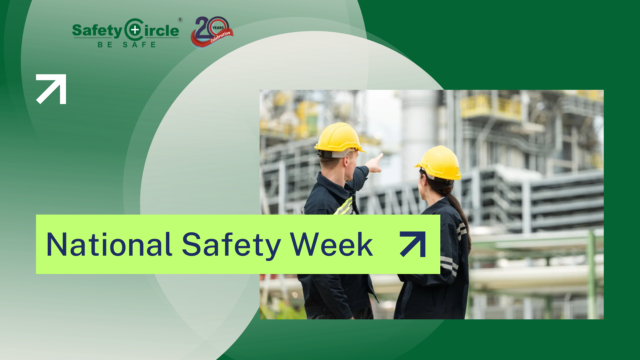
Factory safety exhibitions are organized by manufacturing plants where departments display their practices. Welding groups display protective equipment, and chemical handlers describe procedures.
Construction sites emphasize fall safety with live harness and scaffolding demonstrations. Consequences of failure in controlled demonstrations make learning more effective.
Offices run ergonomics workshops and timed fire drills that sometimes reveal serious evacuation plan problems.
Many organizations also design focused road safety campaign activities for employees who travel frequently, including safe commuting pledges, helmet awareness drives, and transport risk assessments.
The Ripple Effect
Something interesting happens after Safety Weekends.
Before the week, safety sits in the background. Rules exist, and there is a safety officer, but daily work does not involve much safety thinking.
After a week focused on safety, your brain rewires itself. Time spent learning and practicing creates habits that persist beyond March 10.
Here’s an example. Three months later, a worker notices an odd chemical smell near storage. This could have been ignored in the past. However, safety training causes an immediate report. Investigation shows a small leak that could have become serious.
One week of training creates hundreds of these safer choices throughout the year.
Companies actively participating typically see fewer incidents in the following months. This results from better awareness and improved skills.
When management shows genuine care for a full week, workers feel comfortable raising concerns later.
Why This Week Really Matters
This safety week isn’t just another corporate calendar date. It’s your best opportunity to make meaningful protective changes.
Think about typical workdays. Everyone is swamped with tasks and deadlines. Safety training gets postponed. Equipment checks get skipped.
During Safety Week, priorities shift. You have permission from leadership to focus on well-being. Teams engage together with real energy for identifying and fixing problems.
Use this energy well. Have honest conversations about daily dangers. Let workers share worries without fear.
Veterans might have brilliant prevention ideas. New hires might spot hazards everyone else stopped noticing.
Your people want to go home safe every shift. They have families waiting. this Safety Week gives structure to protect that.
One week of genuine effort can save a life.
Take Action This March
National Week of Safety 2026 is your opportunity to build a workplace where everyone goes home safe. Start planning your activities now, involve your teams early, and make this March the beginning of lasting safety improvements. Working with an experienced safety training company can help you design effective programs, perform realistic drills, and ensure measurable improvements in safety performance. The effort you put in this week will protect lives all year long.
Frequently Asked Questions
-
Does National Safety Week really reduce accidents or is it just symbolic?
It is effective when it is done right and produces outcomes that can be measured. The number of incidents decreases after many things have been done by businesses. People learn how to identify risks, practice emergency responses, and enhance their skills. Safety is from reading about it to doing it, which helps develop muscle memory and long-term awareness.
-
How long before seeing actual safety improvements?
Changes appear almost immediately. Within days, workers report previously ignored hazards. Emergency response becomes faster. The bigger cultural shift takes three to six months as safe behaviors become habits. Incident reductions typically show two to three months after a well-run Safety Week.
-
What is the biggest mistake that organizations make during Safety Week?
When they treat it like a compliance task with the least amount of effort. They do one presentation, get signatures, and that is it. Safety Week is effective when it comes to creating memorable experiences with hands-on training, realistic drills, and open discussions. When management goes through the motions, employees do the same, and nothing changes.
-
Can Safety Week prevent common workplace accidents?
Yes. Most workplace accidents are caused by preventable factors: slips, falls, improper use, lack of equipment, and ignoring warnings. Safety Week activities specifically target these factors with fall protection demonstrations, proper equipment training, and hazard walks. What is practiced during Safety Week is what will happen when an emergency occurs